
 24 Hour Emergency
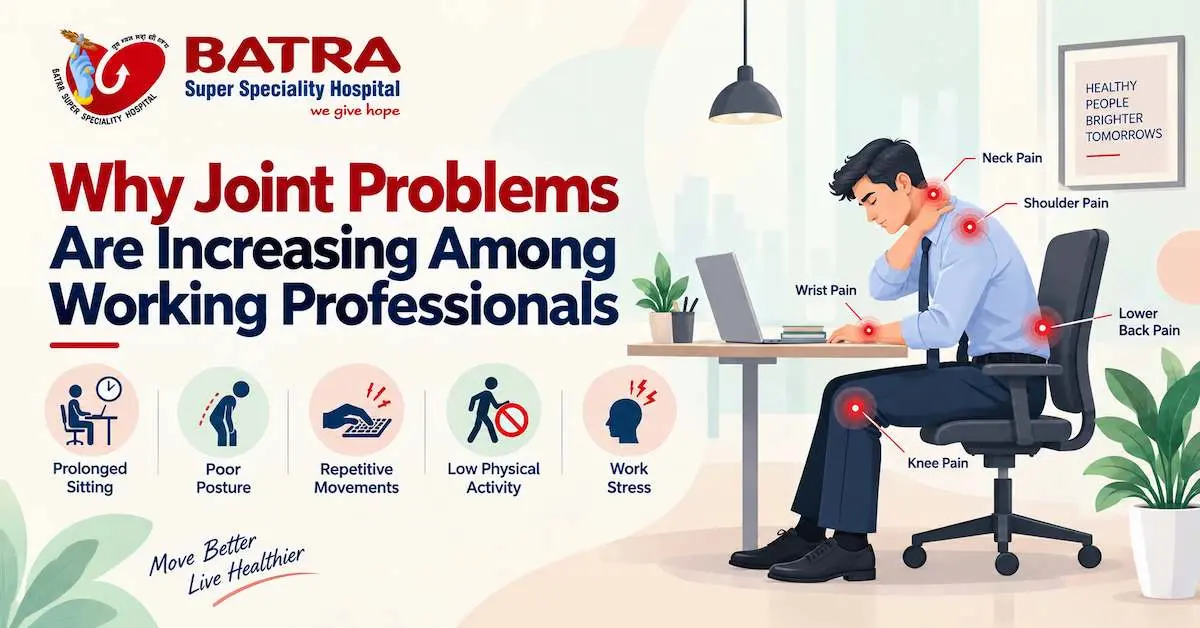
Joint problems are often associated with ageing, but today, many working professionals experience back pain, neck pain, knee pain, shoulder stiffness, and other musculoskeletal problems much earlier in life.
Long working hours, prolonged sitting, limited physical activity, poor posture, increased screen time, stress, and unhealthy lifestyle habits can place additional strain on the muscles and joints.
For people who spend most of their day at a desk, these problems may start gradually. A little stiffness in the morning can become regular discomfort, which may eventually interfere with work, exercise, sleep, and everyday activities.
Understanding the reasons behind these problems can help working professionals take steps to protect their bone and joint health.
1. Long Hours of Sitting
One of the biggest challenges for office workers is sitting for extended periods.
When you remain seated for several hours, especially without regular movement, certain muscles can become weak while others remain under constant strain.
Prolonged sitting may contribute to:
- Lower back discomfort
- Hip stiffness
- Neck pain
- Shoulder tension
- Reduced flexibility
- Poor posture
Taking regular movement breaks can help reduce the physical strain associated with prolonged sitting.
2. Poor Sitting Posture
Posture plays an important role in musculoskeletal health.
Sitting with:
- A rounded back
- Forward head position
- Unsupported lower back
- Shoulders constantly raised
- Screen positioned too low or too high
can place additional stress on the neck, shoulders, and back.
An ergonomic workstation with an appropriately positioned chair, desk, monitor, and keyboard can help promote a more comfortable working position.
3. Lack of Physical Activity
Busy work schedules often leave little time for exercise.
Physical inactivity can contribute to:
- Muscle weakness
- Reduced flexibility
- Joint stiffness
- Poor balance
- Reduced physical fitness
Strong muscles help support and stabilize joints. Regular physical activity can therefore be an important part of maintaining musculoskeletal health.
Even short periods of walking or movement throughout the workday can be useful.
4. Increased Screen Time
Many professionals spend several hours each day looking at computers, laptops, and mobile phones.
Extended screen use can encourage static postures and repetitive movements.
This may contribute to:
- Neck stiffness
- Shoulder pain
- Upper back discomfort
- Wrist discomfort
- Head and neck strain
Adjusting your screen position and taking regular breaks can help reduce prolonged static positioning.
5. Repetitive Movements
Some jobs require repeated movements throughout the day.
Examples include:
- Typing
- Using a mouse
- Repeated lifting
- Manufacturing work
- Driving
- Standing for prolonged periods
Repeated movements can place stress on specific muscles, tendons, and joints. Proper ergonomics, movement variation, and appropriate rest can help reduce excessive strain.
6. Stress and Muscle Tension
Work-related stress can affect the way we hold and move our bodies.
When people are stressed, they may unknowingly tense their:
- Neck
- Shoulders
- Back
- Jaw
Persistent muscle tension can contribute to discomfort and stiffness.
Managing stress through adequate sleep, physical activity, relaxation techniques, and healthy routines can support overall musculoskeletal health.
7. Weight Gain and Sedentary Lifestyle
Reduced physical activity combined with long working hours can contribute to weight gain in some people.
Extra body weight can increase the mechanical load placed on weight-bearing joints, particularly the:
- Knees
- Hips
- Ankles
- Lower back
Maintaining a healthy weight through balanced nutrition and regular physical activity can help reduce unnecessary stress on these areas.
8. Ignoring Early Symptoms
Many professionals continue working despite mild pain because they assume it will disappear on its own.
A common pattern is:
Mild discomfort → ignored symptoms → recurring pain → reduced movement → worsening functional problems
Not every episode of pain indicates a serious condition, but persistent or recurring symptoms should be evaluated rather than repeatedly ignored.
9. Improper Exercise or Sudden Physical Activity
Some people remain inactive during the working week and then perform intense exercise on weekends.
Suddenly increasing activity without adequate conditioning can increase the risk of:
- Muscle strains
- Sprains
- Tendon injuries
- Knee problems
- Back injuries
A gradual increase in exercise intensity, proper warm-up, and appropriate technique can help reduce injury risk.
10. Previous Injuries
An old sports injury, fracture, ligament injury, or joint problem may continue to affect movement long after the initial pain has disappeared.
If an injury was not properly rehabilitated, weakness or restricted movement may remain.
This can sometimes place additional stress on other parts of the body.
Common Joint Problems Among Working Professionals
Depending on the type of work and lifestyle, professionals may experience:
Neck Pain
Often associated with prolonged computer use, poor posture, and static positioning.
Shoulder Pain
May be related to poor workstation ergonomics, repetitive movements, muscle weakness, or previous injuries.
Back Pain
Prolonged sitting, poor posture, muscle weakness, and reduced physical activity can contribute to back discomfort.
Knee Pain
May be associated with previous injuries, weight gain, arthritis, muscle weakness, or changes in physical activity.
Wrist and Hand Pain
Repetitive typing, mouse use, and other repetitive activities can contribute to wrist and hand discomfort.
Warning Signs You Should Not Ignore
Consider consulting an orthopaedic specialist if you experience:
- Persistent joint pain
- Repeated swelling
- Increasing stiffness
- Reduced range of motion
- Difficulty walking
- Joint instability
- Recurrent injuries
- Pain that affects sleep
- Pain that interferes with work or daily activities
- Symptoms that continue despite rest and appropriate self-care
Sudden severe pain after an injury, significant deformity, inability to bear weight, or loss of sensation requires prompt medical assessment.
How Working Professionals Can Protect Their Joints
Small changes to your daily routine can support better musculoskeletal health.
Take Regular Movement Breaks
Avoid remaining in the same position for hours. Stand up, walk, and change your posture regularly.
Improve Your Workstation
Keep your:
- Monitor at a comfortable height
- Chair supportive
- Feet properly supported
- Keyboard and mouse comfortably positioned
Exercise Regularly
Include a combination of:
- Walking
- Strength training
- Stretching
- Mobility exercises
- Balance exercises
Choose activities appropriate for your age and fitness level.
Maintain a Healthy Weight
A balanced diet and regular physical activity can help maintain a healthy weight and reduce stress on weight-bearing joints.
Do Not Ignore Persistent Pain
If pain continues or repeatedly returns, seek professional advice rather than relying on painkillers or home remedies for extended periods.
Can Physiotherapy Help Working Professionals?
Physiotherapy can be useful for many musculoskeletal problems.
Depending on the condition, a physiotherapist may recommend:
- Therapeutic exercises
- Strengthening exercises
- Stretching
- Mobility training
- Posture correction
- Manual therapy
- Ergonomic advice
- Rehabilitation exercises
The appropriate treatment depends on the underlying diagnosis.
When Should You See an Orthopaedic Specialist?
You should consider an orthopaedic consultation if joint or musculoskeletal symptoms are:
- Persistent
- Getting worse
- Repeatedly returning
- Limiting movement
- Affecting work
- Interfering with sleep
- Associated with swelling or instability
- Following a significant injury
An orthopaedic specialist can assess your symptoms, perform a physical examination, and recommend investigations or treatment when required.
Orthopaedic Care at Batra Super Speciality Hospital, Sonipat
The Department of Orthopaedics at Batra Super Speciality Hospital, Sonipat provides evaluation and treatment for a range of bone, joint, muscle, ligament, and sports-related conditions.
Services include:
- Orthopaedic consultation
- Arthritis management
- Fracture management
- Sports injury evaluation
- Knee and shoulder care
- Joint replacement evaluation
- Trauma care
- Spine-related orthopaedic care
- Post-operative rehabilitation
- Physiotherapy support
The treatment plan is based on the patient’s symptoms, diagnosis, lifestyle, functional requirements, and recovery needs.
Conclusion
Joint problems among working professionals are often linked to a combination of prolonged sitting, poor posture, physical inactivity, repetitive movements, stress, weight changes, and previous injuries.
The good news is that many healthy workplace habits can help reduce unnecessary strain. Regular movement, proper ergonomics, physical activity, adequate rest, and early attention to persistent symptoms can all support better musculoskeletal health.
If joint or bone pain continues to affect your work or daily life, consulting an orthopaedic specialist in Sonipat can help identify the cause and determine the appropriate treatment.
For comprehensive bone and joint care, the Department of Orthopaedics at Batra Super Speciality Hospital, Sonipat provides specialist consultation, diagnostic support, treatment, and rehabilitation services.
Frequently Asked Questions
1. Why are joint problems common among working professionals?
Long working hours, prolonged sitting, poor posture, physical inactivity, repetitive movements, stress, weight gain, and previous injuries can contribute to musculoskeletal problems among working professionals.
2. Can sitting for long hours cause joint pain?
Prolonged sitting can contribute to stiffness and discomfort, particularly in the lower back, hips, neck, and shoulders. Regular movement and an ergonomic workstation can help reduce prolonged static positioning.
3. How can office workers prevent joint pain?
Office workers can take regular movement breaks, maintain an ergonomic workstation, exercise regularly, maintain a healthy weight, and avoid ignoring persistent pain.
4. When should I see an orthopaedic doctor for joint pain?
Consult an orthopaedic doctor when pain persists, repeatedly returns, worsens, limits movement, affects sleep or work, or is associated with swelling, instability, or a significant injury.
5. Can physiotherapy help with work-related joint pain?
Physiotherapy may help with many musculoskeletal problems through exercises, mobility training, strengthening, posture correction, rehabilitation, and ergonomic advice.
6. Does working from home increase the risk of joint problems?
Working from home may contribute to musculoskeletal discomfort when people work for long periods without movement or use an unsuitable workstation. Proper ergonomics and regular movement breaks are important.
7. Is joint pain always a sign of arthritis?
No. Joint pain can have many causes, including injuries, overuse, muscle weakness, tendon problems, inflammation, and arthritis. A medical evaluation may be needed to identify the cause.
8. Where can I consult an orthopaedic specialist in Sonipat?
The Department of Orthopaedics at Batra Super Speciality Hospital, Sonipat provides consultation and treatment for various bone, joint, muscle, ligament, and sports-related conditions.
Comments are closed