
 24 Hour Emergency
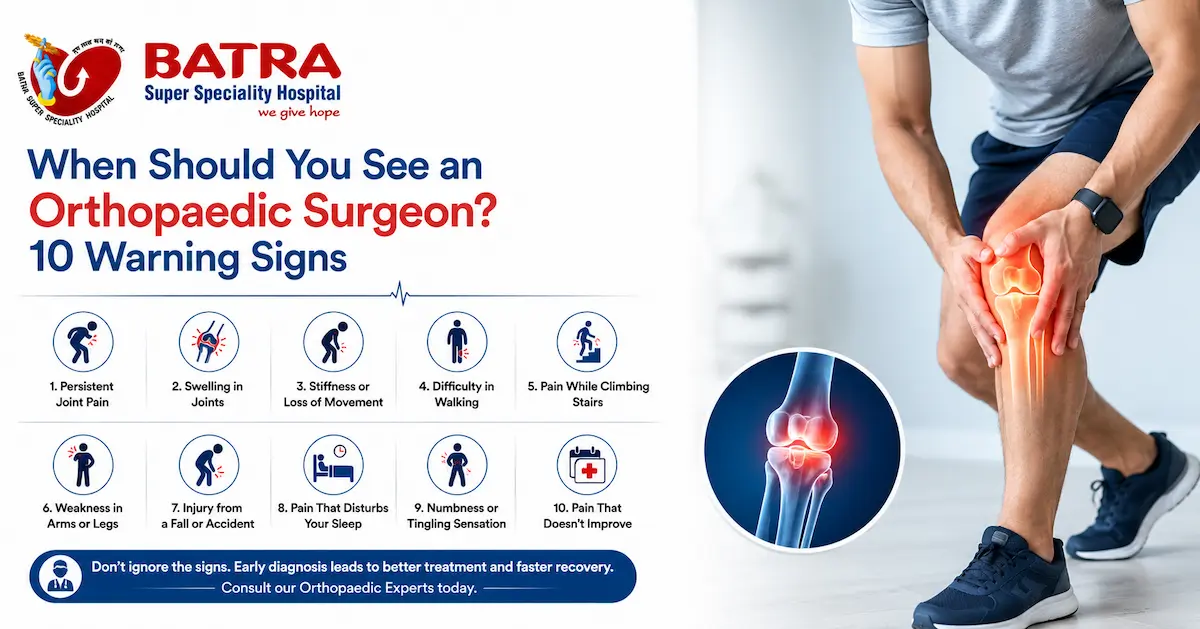
Occasional muscle soreness or joint discomfort can happen after exercise, physical activity, or a minor injury. However, persistent pain, swelling, stiffness, or difficulty moving should not always be ignored.
An orthopaedic surgeon specializes in conditions affecting the bones, joints, muscles, ligaments, tendons, cartilage, and other parts of the musculoskeletal system. While not every orthopedic problem requires surgery, an orthopaedic consultation can help identify the underlying cause and determine whether treatment with medication, physiotherapy, injections, or surgery may be appropriate.
If you are wondering whether it is time to consult an orthopaedic surgeon in Sonipat, these 10 warning signs can help.
1. Persistent Joint Pain
Joint pain that continues for weeks or repeatedly returns may require professional evaluation.
Persistent pain can be associated with:
- Arthritis
- Cartilage damage
- Previous injuries
- Tendon problems
- Ligament injuries
- Joint degeneration
- Inflammation
If pain is affecting your ability to walk, work, exercise, or sleep, consider consulting an orthopaedic specialist.
2. Knee Pain That Affects Walking
Knee pain is common, but persistent or worsening symptoms should not simply be considered a normal part of ageing.
You should consider an orthopaedic evaluation if you experience:
- Pain while walking
- Knee swelling
- Difficulty climbing stairs
- Locking of the knee
- Knee instability
- Difficulty bending or straightening the knee
- Pain that repeatedly returns
The underlying cause could range from arthritis and cartilage problems to ligament or meniscus injuries.
3. Persistent Back or Neck Pain
Back and neck pain may result from muscle strain, poor posture, disc-related problems, arthritis, injuries, or other conditions.
An orthopaedic assessment may be appropriate when pain:
- Persists despite conservative care
- Keeps returning
- Limits movement
- Interferes with sleep
- Affects daily activities
- Is accompanied by weakness or numbness
Some symptoms, such as sudden severe weakness or loss of bladder or bowel control, require urgent medical attention.
4. Swelling Around a Joint
Unexplained or persistent swelling around the knee, shoulder, ankle, wrist, or another joint can indicate an underlying problem.
Joint swelling may occur after:
- Sports injuries
- Ligament injuries
- Fractures
- Arthritis
- Cartilage damage
- Inflammation
If swelling continues, keeps returning, or is associated with significant pain or restricted movement, consult a specialist.
5. Difficulty Moving a Joint
A noticeable reduction in your range of motion can be an important warning sign.
For example, you may find it difficult to:
- Raise your arm
- Bend your knee
- Rotate your shoulder
- Straighten your elbow
- Move your hip
- Turn your neck
Conditions such as frozen shoulder, arthritis, tendon injuries, and previous trauma can affect joint movement.
6. Repeated Sports Injuries
If you frequently experience sprains, strains, joint injuries, or pain during sports, an orthopaedic evaluation may help identify the underlying problem.
Common sports injuries include:
- ACL injuries
- Meniscus injuries
- Ankle sprains
- Ligament injuries
- Muscle strains
- Tendon injuries
- Shoulder injuries
- Fractures
Proper diagnosis and rehabilitation can help reduce the risk of repeated injury.
7. You Suspect a Fracture
A suspected fracture should be evaluated promptly.
Possible signs include:
- Severe pain after an injury
- Significant swelling
- Bruising
- Difficulty using the affected limb
- Inability to bear weight
- Visible deformity
- Abnormal movement
Do not attempt to straighten a visibly deformed limb yourself. Seek urgent medical care.
8. Your Joint Feels Unstable
Does your knee suddenly give way? Does your shoulder feel as though it may come out of place? Does your ankle repeatedly twist?
Joint instability can sometimes be associated with ligament damage, previous injuries, muscle weakness, or structural problems.
Repeated instability can increase the risk of additional injury, making specialist assessment important.
9. Pain Is Interfering With Sleep or Daily Activities
Pain that regularly prevents you from sleeping, working, exercising, or performing routine activities deserves attention.
You should not have to continuously modify your lifestyle around untreated musculoskeletal pain.
An orthopaedic specialist can evaluate the cause and discuss appropriate treatment options.
10. Conservative Treatment Is Not Helping
You may have already tried:
- Rest
- Exercise
- Physiotherapy
- Pain medication
- Ice or heat
- Activity modification
If symptoms continue despite appropriate conservative treatment, an orthopaedic consultation can help reassess the diagnosis and determine what should happen next.
Surgery is not automatically required. Depending on the condition, your specialist may recommend continuing non-surgical treatment, changing your rehabilitation plan, or considering another treatment option.
When Should You Seek Emergency Orthopaedic Care?
Some musculoskeletal injuries require immediate medical attention.
Visit an emergency department if you experience:
- Severe injury after an accident
- Suspected major fracture
- Visible bone or significant deformity
- Severe uncontrolled pain
- Inability to move a limb after significant trauma
- Severe swelling after an injury
- Loss of sensation following an injury
- A limb that becomes unusually pale, blue, or cold
Prompt evaluation can help reduce the risk of complications.
What Does an Orthopaedic Surgeon Treat?
An orthopaedic surgeon can diagnose and manage a wide range of musculoskeletal conditions, including:
- Fractures
- Arthritis
- Sports injuries
- Ligament injuries
- Tendon problems
- Knee disorders
- Shoulder disorders
- Hip disorders
- Joint degeneration
- Certain spine-related conditions
- Trauma-related injuries
Treatment may be surgical or non-surgical depending on the patient’s condition.
What Happens During an Orthopaedic Consultation?
During your appointment, the orthopaedic specialist may ask about:
- Your symptoms
- Duration of pain
- Previous injuries
- Medical history
- Physical activity
- Previous treatment
- Medications
The doctor may also assess:
- Joint movement
- Muscle strength
- Swelling
- Joint stability
- Posture
- Walking pattern
Depending on the findings, investigations such as an X-ray, MRI, CT scan, ultrasound, or blood tests may be recommended.
Does Seeing an Orthopaedic Surgeon Mean You Need Surgery?
No.
This is an important misconception. Orthopaedic surgeons also provide non-surgical treatment and help determine whether surgery is actually necessary.
Depending on your diagnosis, treatment may include:
- Medication
- Physiotherapy
- Exercise therapy
- Weight management
- Activity modification
- Bracing
- Injections
- Rehabilitation
- Surgery when clinically appropriate
The treatment decision depends on the condition, severity, symptoms, diagnostic findings, age, activity level, and overall health.
Why Choose an Orthopaedic Hospital in Sonipat?
For complex bone and joint problems, choosing a hospital with orthopaedic, diagnostic, surgical, emergency, and rehabilitation services can provide more coordinated care.
A comprehensive hospital can offer:
- Orthopaedic consultations
- Diagnostic imaging
- Fracture and trauma care
- Surgical evaluation
- Physiotherapy
- Rehabilitation
- Emergency support
- Multi-speciality consultation when required
This can be particularly helpful for patients with complex injuries or medical conditions requiring more than one specialty.
Orthopaedic Care at Batra Super Speciality Hospital, Sonipat
The Department of Orthopaedics at Batra Super Speciality Hospital, Sonipat provides evaluation and treatment for a range of bone, joint, muscle, ligament, and sports-related conditions.
Services include:
- Orthopaedic consultation
- Fracture management
- Trauma care
- Arthritis management
- Knee and shoulder care
- Sports injury evaluation
- Joint replacement evaluation
- Spine-related orthopaedic care
- Arthroscopy-related care
- Post-operative rehabilitation
- Physiotherapy support
Treatment is planned according to the patient’s diagnosis, symptoms, functional requirements, and recovery goals.
How to Maintain Healthy Bones and Joints
You can support your musculoskeletal health by:
- Staying physically active
- Maintaining a healthy body weight
- Strengthening muscles
- Warming up before exercise
- Using proper technique during sports
- Wearing appropriate protective equipment
- Maintaining good posture
- Eating a balanced diet
- Avoiding tobacco
- Preventing falls
- Getting persistent pain evaluated
Conclusion
Persistent pain is not something you always have to live with. Joint pain, swelling, stiffness, instability, reduced movement, recurring injuries, or difficulty performing everyday activities may indicate an underlying orthopaedic condition.
Knowing the warning signs can help you seek medical attention at the right time. An orthopaedic surgeon in Sonipat can evaluate your symptoms, identify the underlying problem, and recommend an appropriate treatment plan. Treatment does not necessarily mean surgery and may include physiotherapy, medicines, lifestyle modifications, rehabilitation, or other non-surgical approaches.
If you are experiencing ongoing bone, joint, muscle, ligament, or mobility problems, the Department of Orthopaedics at Batra Super Speciality Hospital, Sonipat provides comprehensive evaluation, treatment, diagnostic support, and rehabilitation services.
Frequently Asked Questions
1. When should I see an orthopaedic surgeon?
You should consider seeing an orthopaedic surgeon if you have persistent joint or bone pain, swelling, stiffness, reduced mobility, recurring injuries, joint instability, or symptoms that interfere with daily activities.
2. Does an orthopaedic surgeon only perform surgery?
No. Orthopaedic surgeons also diagnose musculoskeletal conditions and provide non-surgical treatments such as medication, physiotherapy, rehabilitation, injections, and lifestyle advice.
3. How do I know if my knee pain needs an orthopaedic consultation?
Persistent knee pain, swelling, instability, locking, difficulty walking, or difficulty climbing stairs may warrant an orthopaedic evaluation.
4. Can an orthopaedic surgeon treat sports injuries?
Yes. Orthopaedic surgeons evaluate and treat various sports injuries involving bones, joints, ligaments, tendons, muscles, and cartilage.
5. What tests might an orthopaedic surgeon recommend?
Depending on your symptoms, the doctor may recommend an X-ray, MRI, CT scan, ultrasound, or selected blood tests.
6. Can physiotherapy help with orthopedic problems?
Yes. Physiotherapy can help improve strength, flexibility, mobility, balance, and function for many musculoskeletal conditions and during post-operative rehabilitation.
7. When is orthopedic surgery considered?
Surgery may be considered when conservative treatment is unsuccessful, when a condition requires surgical correction, or when the severity of an injury or disease makes surgery appropriate.
8. Where can I consult an orthopaedic surgeon in Sonipat?
The Department of Orthopaedics at Batra Super Speciality Hospital, Sonipat provides consultation and treatment for a range of bone, joint, sports injury, fracture, and musculoskeletal conditions.
Comments are closed