
 24 Hour Emergency
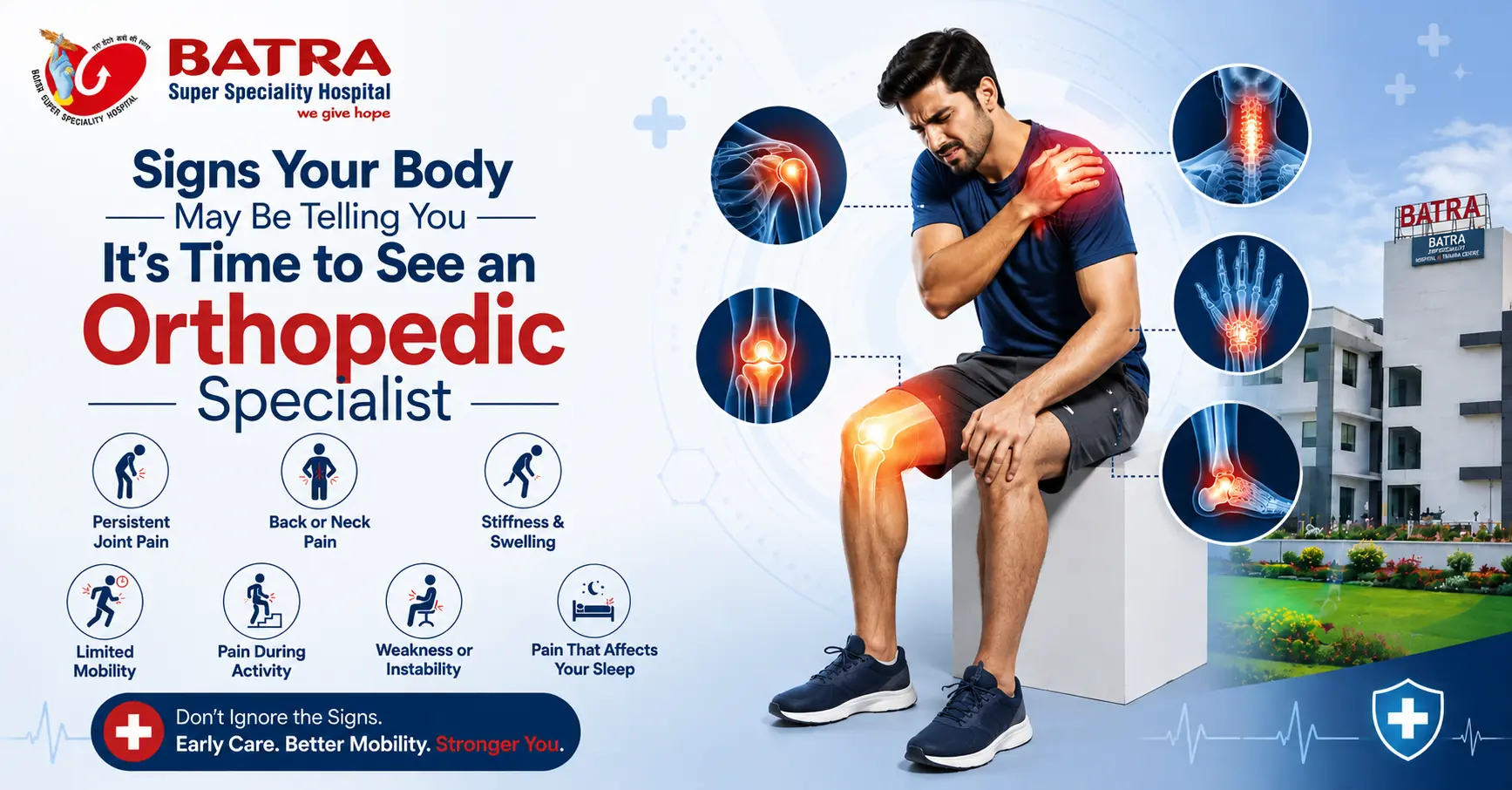
Occasional muscle soreness or mild joint discomfort can happen after exercise, physical activity, or an injury. However, persistent pain, stiffness, swelling, or difficulty moving should not always be ignored.
Orthopedic specialists diagnose and treat conditions affecting the bones, joints, muscles, ligaments, tendons, and other parts of the musculoskeletal system. Getting evaluated at the right time can help identify the cause of your symptoms and determine whether you need medicines, physiotherapy, lifestyle changes, injections, or a surgical procedure.
If you are experiencing ongoing musculoskeletal problems, here are some signs that it may be time to consult an orthopedic specialist in Sonipat.
1. Joint Pain That Does Not Go Away
Pain that continues for several days or keeps returning deserves medical evaluation, particularly when it interferes with walking, working, exercising, or sleeping.
Persistent joint pain may be associated with:
- Arthritis
- Previous injury
- Tendon problems
- Ligament injuries
- Cartilage damage
- Joint inflammation
- Age-related changes
An orthopedic specialist can evaluate the affected joint and recommend appropriate treatment.
2. Persistent Knee Pain
Knee pain is one of the most common orthopedic complaints. It can occur because of an injury, arthritis, ligament damage, cartilage problems, or overuse.
You should consider seeing an orthopedic doctor if knee pain:
- Continues despite rest
- Makes walking difficult
- Causes swelling
- Limits bending or straightening
- Causes instability
- Occurs repeatedly
- Interferes with daily activities
Early evaluation can help determine the cause before the problem becomes more difficult to manage.
3. Back or Neck Pain Is Affecting Daily Life
Back and neck pain can result from muscle strain, poor posture, disc-related problems, arthritis, injuries, or other conditions.
Seek specialist evaluation if pain:
- Persists or repeatedly returns
- Limits movement
- Interferes with sleep
- Makes daily activities difficult
- Travels into the arms or legs
- Is associated with numbness or weakness
Severe or sudden symptoms, particularly weakness or loss of bladder or bowel control, require urgent medical assessment.
4. You Have Difficulty Walking or Moving
Difficulty walking, climbing stairs, standing, or performing everyday movements can indicate an underlying musculoskeletal problem.
Movement difficulties may be caused by:
- Joint damage
- Arthritis
- Muscle weakness
- Previous injury
- Fracture
- Nerve-related problems
- Hip or knee conditions
An orthopedic evaluation can help identify whether the problem originates in the bones, joints, muscles, or other structures.
5. You Have Swelling or Stiffness Around a Joint
Persistent swelling or stiffness may indicate inflammation, injury, arthritis, or another joint problem.
Pay attention if:
- The swelling keeps returning
- The joint feels warm
- Movement is restricted
- Stiffness lasts for a long time
- Pain accompanies the swelling
Do not repeatedly self-treat unexplained swelling without finding the underlying cause.
6. You Experienced a Sports Injury
Sports injuries can affect muscles, tendons, ligaments, cartilage, and bones.
Common injuries include:
- ACL injuries
- Meniscus injuries
- Ankle sprains
- Shoulder injuries
- Tennis elbow
- Muscle strains
- Ligament injuries
- Fractures
Even if the pain initially appears manageable, an orthopedic evaluation may be important when there is significant swelling, instability, inability to bear weight, or persistent pain.
7. You Suspect a Fracture
A fracture can occur after a fall, accident, sports injury, or direct impact. In some cases, especially with weakened bones, a fracture may occur after relatively minor trauma.
Possible signs include:
- Severe pain
- Swelling
- Bruising
- Deformity
- Difficulty moving the affected area
- Inability to put weight on a limb
A suspected fracture requires prompt medical assessment and appropriate imaging.
8. You Feel Your Joint Is Unstable
If your knee, ankle, shoulder, or another joint repeatedly feels as though it may “give way,” it could indicate a ligament, tendon, muscle, or joint problem.
For example, knee instability may occur after certain ligament injuries.
Repeated instability can increase the risk of further injury, so specialist evaluation is recommended.
9. You Have Reduced Range of Motion
If you cannot fully bend, straighten, rotate, or move a joint as you previously could, it may indicate an underlying problem.
Reduced movement can occur because of:
- Arthritis
- Joint injury
- Frozen shoulder
- Tendon problems
- Muscle stiffness
- Scar tissue
- Fracture-related changes
An orthopedic specialist can assess the joint and recommend appropriate treatment.
10. Pain Is Affecting Your Sleep
Pain that regularly wakes you at night or prevents you from getting comfortable should not be ignored.
Persistent night-time pain can occur with several orthopedic and non-orthopedic conditions. A doctor can assess your symptoms and determine whether further investigation is needed.
11. Your Pain Keeps Returning After Temporary Relief
If pain improves temporarily with rest, painkillers, or home remedies but repeatedly returns, the underlying problem may still be present.
Instead of repeatedly treating the symptom, consider getting a proper diagnosis.
Depending on the condition, treatment may include:
- Medication
- Physiotherapy
- Exercise therapy
- Weight management
- Activity modification
- Injections
- Bracing
- Surgery in selected cases
12. You Have Persistent Shoulder Pain
Shoulder problems can make simple activities such as dressing, reaching overhead, or sleeping difficult.
Common causes include:
- Frozen shoulder
- Rotator cuff problems
- Tendinitis
- Shoulder instability
- Arthritis
- Sports injuries
Persistent shoulder pain or significant loss of movement should be evaluated by an orthopedic specialist.
13. You Have Hip Pain
Hip pain can affect walking, sitting, climbing stairs, and sleeping.
It may be associated with:
- Arthritis
- Muscle or tendon injuries
- Bursitis
- Sports injuries
- Fractures
- Other hip conditions
Early diagnosis can help determine the appropriate treatment and prevent worsening functional limitations.
14. Your Bone or Joint Pain Is Getting Worse With Age
Age-related changes can increase the risk of conditions such as osteoarthritis and osteoporosis.
However, persistent pain should not simply be considered a normal part of ageing.
An orthopedic specialist can evaluate your symptoms and recommend ways to maintain mobility and independence.
15. You Have a Previous Injury That Never Fully Recovered
An old injury can continue to cause pain, stiffness, weakness, or instability.
Examples include:
- Previous fractures
- Ligament injuries
- Dislocations
- Sports injuries
- Joint injuries
If an old injury continues to affect your movement or quality of life, a specialist assessment may help identify the reason.
When Should You Seek Emergency Orthopedic Care?
Some injuries require immediate medical attention.
Visit an emergency department if you have:
- Severe injury after an accident
- Visible bone or significant deformity
- Severe uncontrolled pain
- Inability to bear weight after significant trauma
- Sudden loss of movement
- Severe swelling after an injury
- Suspected fracture
- Numbness or loss of sensation after an injury
- A limb that appears pale, blue, or unusually cold
Prompt treatment can help prevent complications.
What Does an Orthopedic Specialist Treat?
An orthopedic specialist treats conditions involving the musculoskeletal system, including:
- Bones
- Joints
- Muscles
- Ligaments
- Tendons
- Cartilage
Common orthopedic conditions include:
- Arthritis
- Fractures
- Sports injuries
- Ligament injuries
- Tendon problems
- Knee disorders
- Shoulder disorders
- Hip disorders
- Spine-related musculoskeletal problems
- Osteoporosis-related fractures
- Joint degeneration
What Can You Expect During an Orthopedic Consultation?
During your consultation, the orthopedic specialist may ask about:
- Your symptoms
- When the pain started
- Previous injuries
- Medical history
- Physical activity
- Current medicines
- Previous treatments
The doctor may examine your:
- Joint movement
- Muscle strength
- Swelling
- Stability
- Posture
- Walking pattern
Depending on your condition, imaging or other investigations may be recommended.
Common Orthopedic Tests
Depending on your symptoms, your doctor may recommend:
- X-ray
- MRI
- CT scan
- Ultrasound
- Bone density testing
- Blood tests in selected cases
Not every patient requires imaging. The appropriate investigation depends on the clinical evaluation.
Can Physiotherapy Help Orthopedic Problems?
Physiotherapy can play an important role in managing many musculoskeletal conditions.
It may help:
- Reduce pain
- Improve flexibility
- Strengthen muscles
- Improve balance
- Restore movement
- Support recovery after injury
- Improve function after surgery
For some conditions, physiotherapy may be the primary treatment, while in others it may be combined with medication or surgery.
When Is Orthopedic Surgery Required?
Not every orthopedic problem requires surgery.
Depending on the condition, doctors may initially recommend:
- Rest
- Activity modification
- Medication
- Physiotherapy
- Exercise
- Weight management
- Bracing or support
Surgery may be considered when conservative treatment does not provide adequate improvement or when the injury or condition requires surgical correction.
Examples may include certain fractures, severe joint damage, selected ligament injuries, and advanced joint degeneration.
Why Choose an Orthopedic Hospital in Sonipat?
Choosing a hospital with orthopedic, diagnostic, emergency, and rehabilitation services can be particularly useful when patients require comprehensive care.
A multi-speciality hospital can provide:
- Orthopedic consultations
- Diagnostic imaging
- Fracture and trauma care
- Surgical evaluation
- Physiotherapy
- Rehabilitation
- Emergency support
- Coordination with other medical specialties
This allows patients to receive appropriate care based on their individual condition.
Orthopedic Care at Batra Super Speciality Hospital, Sonipat
The Department of Orthopaedics at Batra Super Speciality Hospital, Sonipat provides evaluation and treatment for a wide range of bone, joint, muscle, ligament, and orthopedic conditions.
Services may include:
- Orthopedic consultation
- Fracture management
- Trauma care
- Arthritis management
- Knee and shoulder care
- Sports injury evaluation
- Joint replacement evaluation
- Spine-related orthopedic care
- Arthroscopy-related care
- Post-operative rehabilitation
- Physiotherapy support
The treatment approach is based on the patient’s condition, symptoms, diagnostic findings, age, lifestyle, and recovery goals.
How to Protect Your Bones and Joints
You can support musculoskeletal health by:
- Staying physically active
- Maintaining a healthy weight
- Strengthening muscles
- Following proper exercise techniques
- Using protective equipment during sports
- Maintaining good posture
- Eating a balanced diet
- Getting adequate calcium and vitamin D as advised
- Avoiding tobacco
- Preventing falls, especially in older adults
- Getting persistent pain evaluated
Conclusion
Pain is not always something you should simply learn to live with. Persistent joint pain, swelling, stiffness, reduced mobility, recurring injuries, instability, or difficulty performing everyday activities may indicate an underlying orthopedic condition.
Recognizing these warning signs and consulting an orthopedic specialist in Sonipat can help identify the cause and determine the most appropriate treatment. Depending on the condition, treatment may involve medicines, physiotherapy, lifestyle changes, injections, or surgery.
If you are experiencing ongoing bone, joint, muscle, ligament, or mobility problems, the Department of Orthopaedics at Batra Super Speciality Hospital, Sonipat provides comprehensive orthopedic evaluation and treatment with diagnostic, surgical, and rehabilitation support.
Frequently Asked Questions
1. When should I see an orthopedic specialist?
You should consider seeing an orthopedic specialist if you have persistent bone or joint pain, swelling, stiffness, reduced movement, repeated injuries, instability, or difficulty performing daily activities.
2. Is knee pain a reason to visit an orthopedic doctor?
Yes. Persistent or worsening knee pain, swelling, instability, or difficulty walking may require orthopedic evaluation.
3. Can an orthopedic specialist treat back pain?
Yes. Orthopedic specialists can evaluate many musculoskeletal causes of back pain. Depending on the suspected cause, you may also be referred to another specialist.
4. Do all orthopedic problems require surgery?
No. Many orthopedic conditions can initially be managed with medication, physiotherapy, exercise, activity modification, or other non-surgical treatments. Surgery is considered when clinically appropriate.
5. When is joint pain considered serious?
Joint pain should receive medical attention when it is persistent, worsening, associated with significant swelling or fever, limits movement, follows a significant injury, or interferes with everyday activities.
6. What tests may an orthopedic specialist recommend?
Depending on your symptoms, the doctor may recommend an X-ray, MRI, CT scan, ultrasound, bone density test, or selected blood tests.
7. Can physiotherapy help with orthopedic conditions?
Yes. Physiotherapy can help improve strength, flexibility, mobility, balance, and function in many orthopedic conditions and is also commonly used during rehabilitation after injuries or surgery.
8. Where can I consult an orthopedic specialist in Sonipat?
The Department of Orthopaedics at Batra Super Speciality Hospital, Sonipat provides orthopedic consultations and treatment for a range of bone, joint, muscle, ligament, and sports-related conditions.
Comments are closed