
 24 Hour Emergency
Introduction
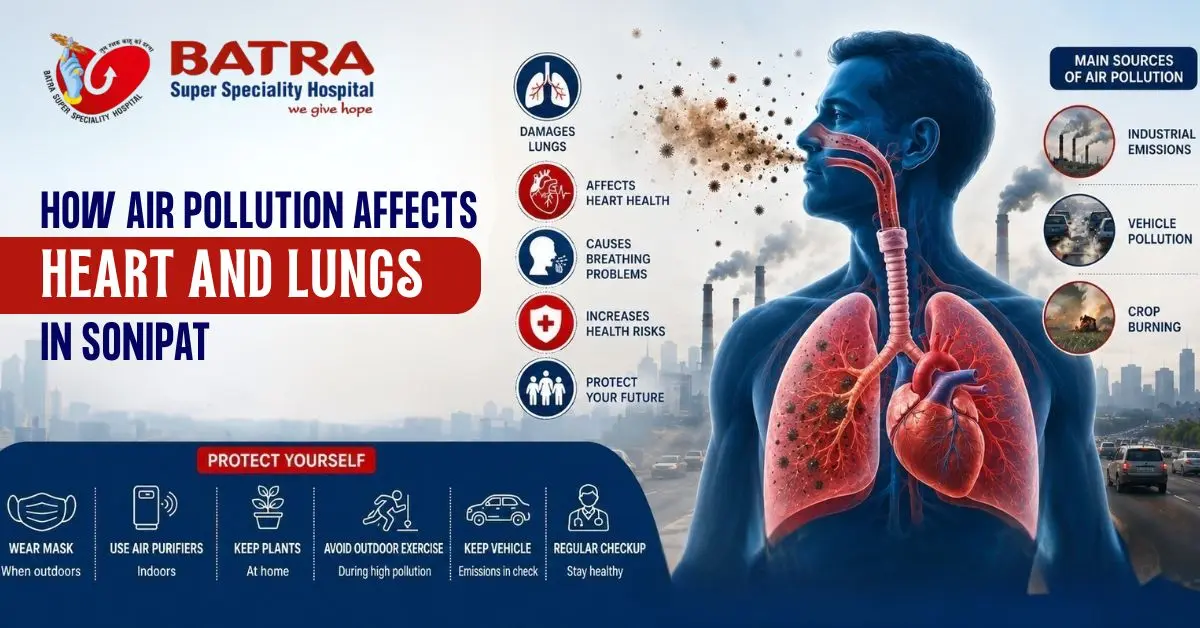
Air pollution has become a major health concern in many parts of North India, including Sonipat and nearby NCR regions. Dust, smoke, vehicle emissions, industrial pollution, seasonal smog, crop residue burning, and changing weather conditions can reduce air quality and affect daily breathing comfort.
Many people think air pollution only causes cough, throat irritation, or breathing problems. However, polluted air can also affect the heart. Fine pollution particles can enter deep into the lungs and may also enter the bloodstream, increasing stress on the heart and blood vessels.
For people living in Sonipat, especially children, senior citizens, heart patients, asthma patients, COPD patients, and people with diabetes or high blood pressure, poor air quality can create serious health risks. Understanding the connection between air pollution, heart health, and lung health can help you take timely precautions and seek medical care when needed.
What Makes Air Pollution Harmful?
Air pollution contains a mixture of harmful substances. Some of the common pollutants include:
- PM2.5 fine particles
- PM10 dust particles
- Smoke
- Vehicle emissions
- Industrial pollutants
- Nitrogen dioxide
- Sulphur dioxide
- Ozone
- Carbon monoxide
- Allergens and suspended dust
Among these, PM2.5 is especially concerning because these particles are very small and can travel deep into the lungs. Long-term or repeated exposure to polluted air may increase the risk of respiratory and cardiovascular problems.
How Air Pollution Affects the Lungs
The lungs are directly exposed to the air we breathe. When air quality is poor, harmful particles and gases can irritate the airways and reduce normal lung function.
Air pollution may cause:
- Cough
- Throat irritation
- Chest tightness
- Wheezing
- Breathlessness
- Increased mucus production
- Frequent respiratory infections
- Reduced stamina
- Worsening of asthma or COPD symptoms
People who already have asthma, COPD, bronchitis, pneumonia, allergies, or post-COVID breathing issues may feel symptoms more strongly during high pollution days.
Air Pollution and Asthma
Asthma patients are more sensitive to polluted air. Dust, smoke, and chemical pollutants can irritate the airways and trigger asthma symptoms.
Common asthma symptoms during pollution exposure include:
- Wheezing sound while breathing
- Shortness of breath
- Coughing, especially at night or early morning
- Chest tightness
- Frequent need for inhaler
- Difficulty doing normal activities
If asthma symptoms increase during pollution season, it is important to consult a lung doctor in Sonipat for proper evaluation and treatment adjustment.
Air Pollution and COPD
COPD, or Chronic Obstructive Pulmonary Disease, is a long-term lung condition that causes breathing difficulty. Air pollution can worsen COPD symptoms and may increase the risk of flare-ups.
COPD patients should be careful if they notice:
- Increased breathlessness
- More coughing than usual
- Change in sputum colour
- Chest heaviness
- Low oxygen levels
- Difficulty walking or climbing stairs
- Frequent respiratory infections
COPD flare-ups can become serious if ignored. Patients with known COPD should follow their doctor’s advice, use medicines properly, and avoid outdoor exposure during poor air quality days.
How Air Pollution Affects the Heart
Air pollution does not stop at the lungs. Fine particles can create inflammation and stress in the body, which may affect the heart and blood vessels.
Poor air quality may contribute to:
- Increased blood pressure
- Irregular heartbeat
- Chest discomfort
- Reduced oxygen supply
- Increased stress on the heart
- Higher risk in people with existing heart disease
- Worsening of symptoms in heart patients
People with heart problems, high blood pressure, diabetes, obesity, high cholesterol, or a family history of heart disease should be extra careful during high pollution periods.
Air Pollution and Chest Pain
Chest pain should never be ignored. In polluted conditions, some people may feel chest tightness, heaviness, or discomfort due to reduced oxygen levels, breathing strain, or heart-related stress.
You should visit a heart hospital in Sonipat immediately if chest pain is associated with:
- Sweating
- Breathlessness
- Pain going to left arm, shoulder, jaw, or back
- Dizziness
- Nausea
- Irregular heartbeat
- Sudden weakness
- Feeling of pressure or heaviness in the chest
These symptoms may indicate a serious heart condition and require urgent medical attention.
Why Sonipat Residents Should Be Careful
Sonipat is close to Delhi-NCR, where pollution levels often increase due to traffic, construction dust, industrial activity, seasonal weather changes, and winter smog. During certain months, pollution can stay trapped near the ground, making breathing more difficult.
People who travel daily, work outdoors, exercise outside, or live near busy roads may experience more exposure to dust and polluted air.
Common groups at higher risk include:
- Children
- Senior citizens
- Pregnant women
- Asthma patients
- COPD patients
- Heart patients
- Diabetic patients
- People with high blood pressure
- Outdoor workers
- Smokers
- People recovering from lung infection
For these groups, even short-term exposure to poor air quality may worsen symptoms.
Warning Signs You Should Not Ignore
Consult a doctor if you experience:
- Persistent cough for more than a few days
- Breathing difficulty
- Wheezing
- Chest pain or heaviness
- Sudden fatigue
- Frequent throat irritation
- Repeated respiratory infections
- Low oxygen levels
- Fast heartbeat
- Dizziness with breathlessness
- Worsening asthma or COPD symptoms
Timely consultation can help detect problems early and prevent complications.
When to Consult a Lung Doctor in Sonipat
You should consult a pulmonologist or lung specialist if you have repeated breathing problems, chronic cough, asthma symptoms, COPD, sleep-related breathing issues, or pollution-related respiratory discomfort.
A lung doctor may recommend tests such as:
- Chest X-ray
- Pulmonary Function Test
- Blood tests
- Oxygen level monitoring
- CT chest, if required
- Allergy evaluation
- Bronchoscopy, if needed
Early diagnosis can help manage lung conditions better and reduce the risk of severe breathing problems.
When to Consult a Cardiologist in Sonipat
You should consult a cardiologist if you have symptoms such as chest pain, breathlessness, high blood pressure, irregular heartbeat, dizziness, or unexplained fatigue.
A cardiologist may recommend:
- ECG
- Echo
- TMT
- Holter monitoring
- Blood pressure monitoring
- Cardiac risk evaluation
- Further heart tests, if required
People with heart disease should not ignore pollution-related discomfort, especially during smog or poor AQI days.
How to Protect Your Heart and Lungs from Air Pollution
While pollution cannot always be avoided completely, you can reduce exposure and protect your health with simple steps.
1. Check AQI Before Going Outside
Before outdoor exercise, morning walks, or long travel, check the air quality index. If AQI is poor or very poor, avoid unnecessary outdoor exposure.
2. Avoid Morning Walks During Smog
Pollution levels can be high during early morning hours, especially in winter. People with asthma, COPD, heart disease, or high blood pressure should avoid outdoor walks during heavy smog.
3. Use a Good Mask Outdoors
A properly fitted N95 mask can help reduce inhalation of fine particles when outdoor exposure is unavoidable.
4. Keep Indoor Air Cleaner
Keep doors and windows closed during high pollution periods. Avoid indoor smoke from incense sticks, mosquito coils, tobacco, and poor ventilation.
5. Stay Hydrated
Drinking enough water helps keep the throat and airways moist. It may also reduce irritation caused by dry and polluted air.
6. Avoid Smoking
Smoking combined with air pollution can seriously damage the lungs and increase heart risk. Avoid active and passive smoking.
7. Do Not Ignore Medicines
Asthma, COPD, heart, blood pressure, and diabetes patients should take medicines regularly as prescribed by the doctor.
8. Avoid Self-Medication
Do not start antibiotics, steroids, inhalers, or heart medicines without medical advice. Wrong medication can delay proper treatment.
9. Exercise Indoors on Poor AQI Days
If air quality is poor, choose indoor stretching, breathing exercises, or light activity instead of outdoor running or cycling.
10. Visit a Doctor Early
If symptoms continue or worsen, consult a specialist instead of waiting for the condition to become serious.
Air Pollution and Children
Children breathe faster than adults and their lungs are still developing. Pollution exposure may cause cough, allergies, wheezing, throat irritation, and frequent infections in children.
Parents should watch for:
- Repeated cough
- Noisy breathing
- Difficulty playing
- Fast breathing
- Chest tightness
- Fever with breathing difficulty
- Frequent use of nebulization
Children with asthma or allergies should be monitored carefully during pollution season.
Air Pollution and Senior Citizens
Senior citizens are more vulnerable because they may already have heart disease, high blood pressure, diabetes, weak immunity, or reduced lung capacity.
They should avoid outdoor exposure during poor AQI days and seek medical help if they experience chest pain, breathlessness, dizziness, confusion, severe cough, or low oxygen levels.
Why Choose Batra Super Speciality Hospital in Sonipat?
Batra Super Speciality Hospital provides multi-speciality healthcare services for patients with heart, lung, emergency, and critical care needs. The hospital offers specialist consultation, diagnostic support, emergency care, ICU support, and treatment for various heart and respiratory conditions.
If you are looking for a heart hospital in Sonipat, lung hospital in Sonipat, or best lung doctor in Sonipat, Batra Hospital provides patient-focused care with experienced doctors and modern facilities.
Conclusion
Air pollution can affect both the heart and lungs. It may trigger cough, asthma, COPD, breathing difficulty, chest tightness, high blood pressure, irregular heartbeat, and heart-related complications in vulnerable people.
For residents of Sonipat, especially during high pollution days, it is important to take precautions, monitor symptoms, and consult a doctor early when needed.
If you or your family member is experiencing breathing difficulty, chest pain, chronic cough, asthma symptoms, or heart-related discomfort, visit Batra Super Speciality Hospital in Sonipat for expert consultation and timely care.
Book your appointment today with Batra Super Speciality Hospital, Sonipat.
FAQs
1. Can air pollution cause breathing problems?
Yes. Air pollution can irritate the lungs and airways, causing cough, wheezing, chest tightness, breathlessness, and worsening of asthma or COPD symptoms.
2. Can air pollution affect the heart?
Yes. Fine pollution particles may increase inflammation, blood pressure, and stress on the heart, especially in people with existing heart disease or risk factors.
3. Who is most affected by air pollution?
Children, senior citizens, pregnant women, asthma patients, COPD patients, heart patients, diabetics, smokers, and outdoor workers are at higher risk.
4. When should I consult a lung doctor in Sonipat?
You should consult a lung doctor if you have chronic cough, breathing difficulty, wheezing, asthma symptoms, COPD, frequent chest infections, or post-COVID breathing problems.
5. When should I visit a heart hospital in Sonipat?
Visit a heart hospital immediately if you have chest pain, breathlessness, sweating, dizziness, irregular heartbeat, or pain spreading to the arm, shoulder, jaw, or back.
6. How can I protect myself during high pollution days?
Check AQI, avoid outdoor exercise, use an N95 mask when needed, keep indoor air clean, avoid smoke exposure, take prescribed medicines regularly, and consult a doctor if symptoms worsen.
Comments are closed